MyExperienceApplyingtoAppleDeveloperAcademy
Passed the initial CV and portfolio screening, but got knocked out in the online test. Here is my experience pulling a 3 AM testing session for Apple Developer Academy and my thoughts on how their selection works.
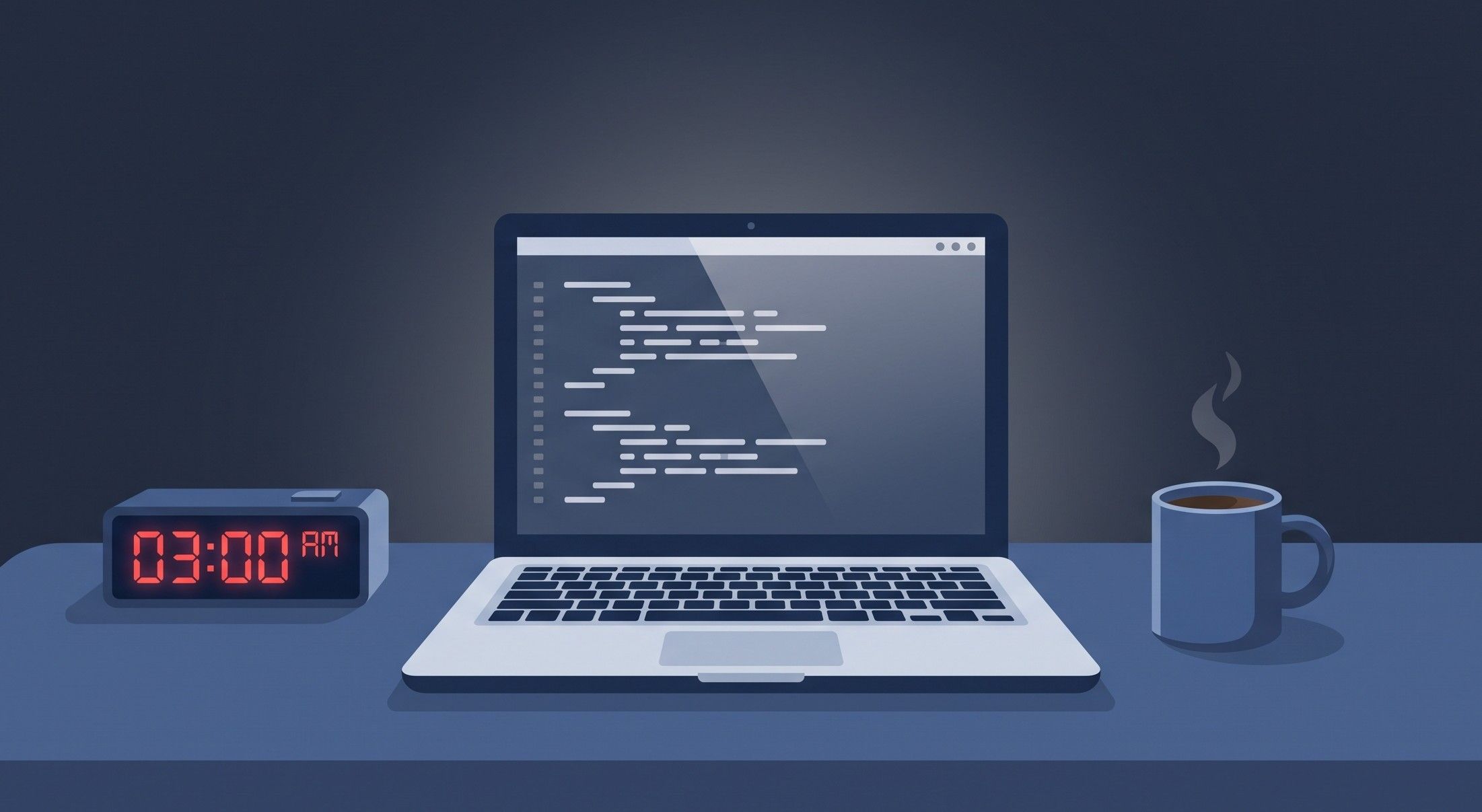
Bad news, everyone: I didn't make the cut for Apple Developer Academy this year. I applied to three cohorts at once: Jakarta, Tangerang, and Batam. The wait for results was nerve-racking, constantly refreshing my inbox, only to find out it wasn't my turn yet. That's totally fine though. Going through the whole process was a blast, and sharing the story might help anyone planning to apply next year.
Passing the First Stage: CV and Portfolio
It all started with the initial screening where we had to submit a CV and a portfolio highlighting our best projects. The good news was that my application made it through. That felt pretty rewarding because it validated that my projects and resume met their benchmark. All the hours spent building things paid off at least to that point. Once the acceptance email came through, I had to mentally prepare for the next hurdle: an online assessment that turned out to be quite an adrenaline rush.
Early Morning Assessment Drama
Quick context: the Apple Dev online test is strict. You have to keep both your mic and camera turned on the whole time. That means your room has to be completely silent. Having loud motorbikes or random roosters in the background would not look great on camera. So I decided to take the assessment between 3 AM and 5 AM when the neighborhood is quiet.
That early hour is great for concentration, but it wasn't without drama. Right in the middle of a question while the timer was ticking, my browser somehow navigated back a page. My heart dropped, thinking all my answers were wiped or that the proctoring software would auto-fail me. Luckily, their testing platform has a solid resume feature, so I was able to pick right up where I left off. Surviving panic and sleep deprivation at 4 AM was an experience on its own.
Breaking Down the Test: Logic vs Programming
The assessment was split into two main sections: programming and logic. Looking at programming first, it felt pretty manageable. The questions revolved around fundamentals. As long as you understand basic control flow, data types, and core OOP principles, you should be fine. There was no requirement to write complex algorithms from scratch, mostly just reading snippets of pseudocode and figuring out the expected output.
The logic section, however, was a different story. It felt like a mix of standard IQ questions and college entrance reasoning puzzles. You get problems asking you to arrange people into seating charts based on scattered clues, number sequences, and logic grids. The final boss was definitely the abstract shape pattern recognition. Some patterns felt invisible at first glance. If your spatial reasoning and pattern recognition are sharp, you will probably cruise through. If not, get ready to stare at the screen wondering what is going on.
The Mystery Behind Cohort Selection
One thing I spent a lot of time thinking about after getting the results was how the academy actually picks candidates for the FGD (group discussion) round. From the outside, the selections can feel almost unpredictable.
After comparing notes with other applicants, some friends with crazy good resumes and polished portfolios did not make it. Meanwhile, others with simpler backgrounds and less experience received invitation emails. It shows that they are not just hunting for the most seasoned coder in the room. They are curating balanced cohorts, looking for designers, domain experts, and different personalities that fit together in a team. Team composition and subjective fit play a huge role in the final outcome.
On to Next Year
That was pretty much my journey with Apple Developer Academy this year. Even though the coding part felt straightforward, I did not make the cut. Getting a firsthand look at the assessment was totally worth it though. It is a good reminder to keep leveling up my projects, polish my portfolio, and try again.
I will definitely be re-applying next year. For anyone thinking of taking the test, practice abstract reasoning, prep your environment so you won't be interrupted, and give it your best shot. See you in the next round!
(Share)